
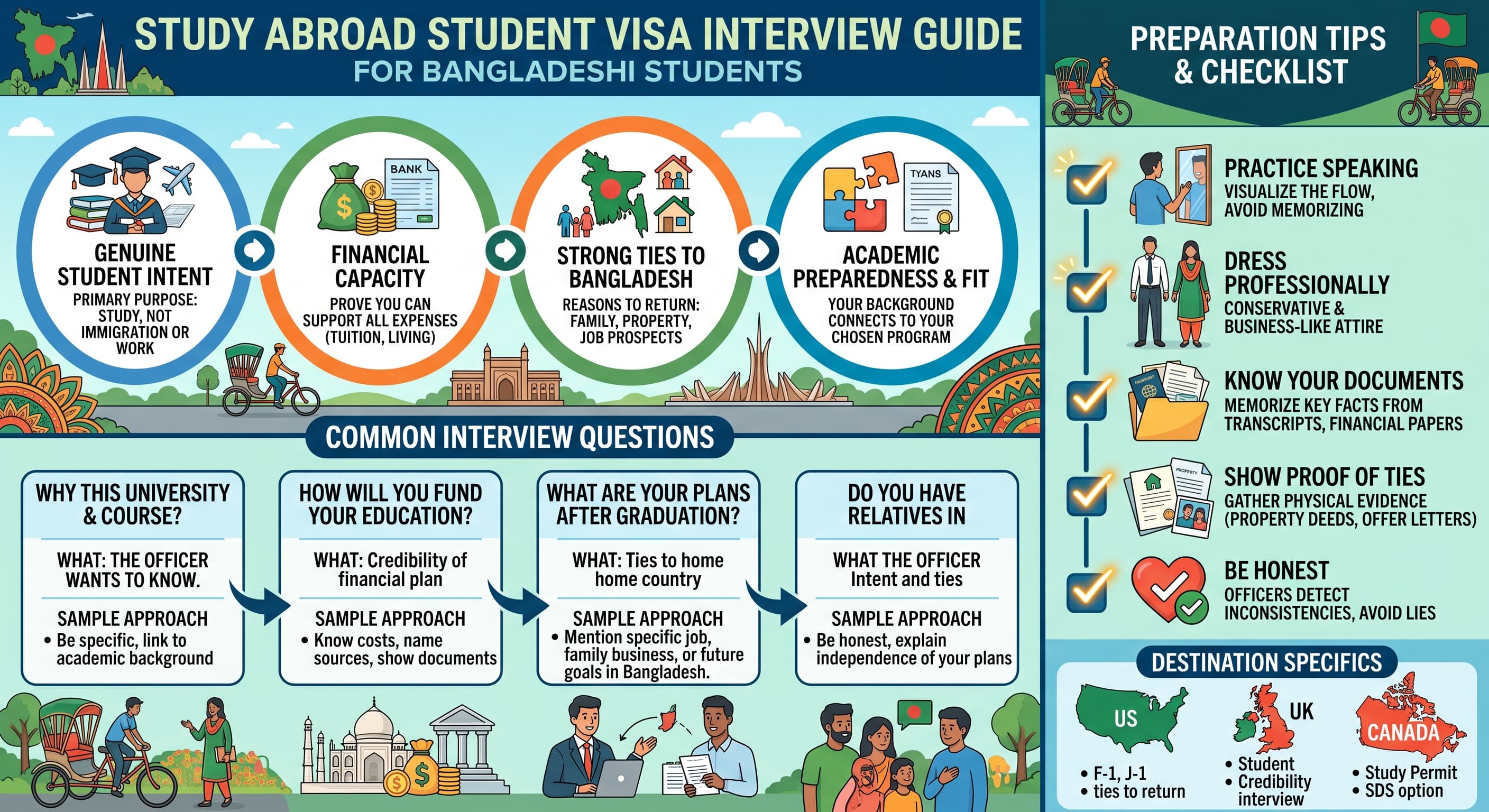
Common student visa interview questions for Bangladeshi students and how to prepare: UK university credibility interviews, UK visa and US F-1 interviews, question themes, preparation steps and mistakes to avoid.
Most student visa interview questions that Bangladeshi students face come back to one issue: are you a genuine student with a credible study plan and the funds to support it? Whether it is a UK university's credibility interview, a UK visa interview or a US F-1 interview, officers usually ask five things:
Why this country?
Why this university?
Why this course?
How will you pay?
What will you do after graduating?
This guide explains what interviewers look for according to official guidance, lists the common question themes, and shows how to prepare honest, confident answers. It also covers the mistakes that most often raise concerns. We do not provide scripted answers. Memorised replies usually sound unnatural, and your answers must reflect your own genuine plans.
Key Takeaways
Interviews test credibility: your study plan, course knowledge, finances and future plans must make sense together.
UK universities often run their own credibility interviews before issuing a CAS.
US student visa interviews are generally required, and officers assess your funds and intent to depart after your studies.
Know your course in detail: modules, duration, level, fees and location.
Your answers must match your SOP, documents and financial evidence.
Honesty matters more than perfect English. Never give false information.
What Interviewers Want to Know
For the UK, every Student visa applicant must be a genuine student under the Immigration Rules. The Home Office's Student route caseworker guidance lists factors that caseworkers consider when assessing credibility:
Immigration history
Education history and study path
Post-study plans
Personal and financial circumstances
English ability
The guidance also covers the time since you last studied, if you have a significant gap.
For the USA, the US State Department says interviews are generally required. Consular officers may ask for evidence of two things:
Your intent to depart the United States after your course
How you will pay your education, living and travel costs
In short, interviewers want to see that your plan is logical, affordable and genuinely yours.
Which Interviews Might You Face?
UK University Credibility Interviews
Many UK universities interview international applicants before issuing a CAS. The University of Westminster notes that invitations can depend on your circumstances, such as your immigration or education history. Coventry University groups its questions into five themes:
Why the UK
Why the university
Why the course
Career plans
Finances
UK Visa Interviews
As part of the genuine student assessment, the Home Office may ask some applicants for an interview. This usually happens where caseworkers need more information about their study plans or circumstances. Expect questions similar to university credibility interviews.
US F-1 Visa Interviews
You attend an interview at the US Embassy with your passport, DS-160 confirmation and Form I-20. Officers focus on your study plans, finances and intent to return after your studies.
Other Destinations
Student visa decisions for Malaysia, Russia, China and South Korea are often mainly document-based. However, embassies or universities may still ask for an interview or extra information. Always follow the instructions you receive.
Common Student Visa Interview Questions by Theme
1. About You and Your Background
Tell me about yourself and your education.
What did you study most recently, and what were your results?
Are you currently working? What do you do?
How to approach it: Give a short, factual summary that leads naturally to your chosen course.
2. Why This Country?
Why do you want to study in this country rather than Bangladesh?
Which other countries did you consider?
How to approach it: Give specific academic reasons, such as programme structure, teaching approach or specialisation. Also explain why this option suits you better than studying at home. Avoid answers based only on work or settling abroad.
3. Why This University?
Why did you choose this university?
Which other universities did you apply to?
Where is the university, and where will you live?
How to approach it: Mention concrete features you researched, such as modules, facilities, research areas or location. Be honest about your other applications.
4. Why This Course?
What is the name and level of your course?
Can you name some modules, and how will you be assessed?
How long is the course, and when does it start?
How does it connect to your previous study or work?
How to approach it: Know your course details well. Coventry advises understanding your modules, assessment methods and course level.
5. Finances and Sponsorship
How much is your tuition fee, and how much have you paid?
Who is sponsoring you, and what do they do?
How will you cover living costs?
How to approach it: Know the exact figures in your documents and your sponsor's source of income. Your answers must match your bank statements and sponsor letters. See the UK's official funds requirements.
6. Study Gap or Academic History
What have you been doing since your last studies?
Why are you returning to study now?
How to approach it: Explain your timeline clearly, with evidence such as work letters. Read our guide on explaining a study gap.
7. Plans After Graduation
What will you do after completing your course?
How will this qualification help your career?
How to approach it: Describe a realistic career plan linked to your course. Where relevant, mention how it connects to opportunities in Bangladesh. Be honest, and do not claim plans you do not have.
How to Prepare: Step by Step
Reread your SOP and application. Your answers must match what you submitted.
Research your course and university. Know the modules, duration, fees, campus and city.
Know your finances. Understand your fees, deposits paid, sponsor details and the source of funds.
Organise your documents in the order requested. Our student visa file checklist helps.
Practise speaking English naturally, focusing on clarity rather than memorised scripts.
Do mock interviews with a counsellor or mentor, and ask for honest feedback.
Check the technical set-up for online interviews: internet, camera, quiet room and valid ID.
On the Interview Day
Arrive or log in early, dressed neatly.
Listen carefully, and ask the interviewer to repeat a question if it is unclear.
Take a moment to think before answering. Coventry notes that you do not need to rush.
Answer directly and briefly, then add detail if asked.
Do not read from notes unless you are allowed to.
Stay calm and polite, even if a question feels difficult.
Mistakes That Raise Concerns
Giving memorised or copied answers that do not sound like your own.
Not knowing basic course details, such as modules, duration or fees.
Contradicting your SOP, bank statements or sponsor documents.
Focusing on work, money or settling abroad instead of study.
Being unable to explain sudden large deposits or your sponsor's income.
Giving false information or using fake documents, which can lead to refusal and future bans.
For more on preparing applications, see our step-by-step university application guide.
Frequently Asked Questions
What questions are asked in a student visa interview?
Most questions cover why you chose the country, university and course, how you will pay, your academic background and your plans after graduation.
Is there a visa interview for UK student visas?
Many UK universities hold credibility interviews before issuing a CAS. The Home Office may also interview some applicants as part of its genuine student assessment.
Is a visa interview required for a US student visa?
According to the US State Department, interviews are generally required for student visa applicants, with limited exceptions.
Can I bring notes into the interview?
Usually you should answer without reading notes. Follow the specific instructions from your university or embassy.
What if I don't understand a question?
Politely ask the interviewer to repeat or rephrase it. This is better than guessing.
Does poor English cause refusal?
English ability can be one factor in credibility assessments, especially if your course requires a certain level. Clear, simple and honest answers matter more than advanced vocabulary.
Should I memorise answers?
No. Prepare the facts and your genuine reasons, then practise explaining them naturally in your own words.
Prepare for Your Interview with Southern Trip Limited
Good preparation helps you explain your plans clearly and confidently. Southern Trip Limited helps Bangladeshi students review their study plans and documents, and practise for credibility and visa interviews through mock sessions. We support students applying to the UK and our other destinations.
Visa decisions are made solely by immigration authorities, so no consultancy can guarantee an outcome. Get your profile assessed or book a free counselling session to prepare for your interview.
Guidance in this article was checked against official sources in September 2026 and may change. Always follow the latest instructions from your university and the relevant embassy or immigration authority.
Planning to Study Abroad?
Speak with our team to compare your options and choose the right next step.